LearningCurve
Artist Subtitle Statement
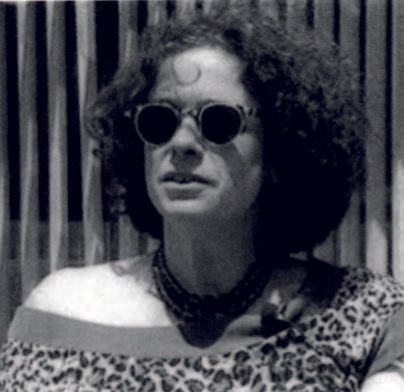
At the very first disability activist meeting I went to, there were three or four other women, all of us wheelchair users.
They were employees of the rehab institute I was housed in following a horrific automobile accident that felled me, like a tree cut down in a forest, in my early twenties. I didn’t have any idea what the world had in store for me; but they knew.
They were all secretaries, probably 10-20 years older than me. Each lived on her own or with a husband – neither life was something I thought could any longer be part of my future. Each drove a car, which they told me was the only possible way it to get around New York City. I was 23, a city kid, and had never learned how to drive. It hadn’t occurred to me that I would be unable to get on the subway or a bus.
In those days, following a spinal cord injury like the one I sustained, you stayed in rehab for months, at least in the institutions that housed people with some kind of health insurance and the means to receive extended care. I met one of these activist women as I explored the building, attempting to learn as much as I could about this institution I was confined to, and about how to use the clunky hospital-issue wheelchair I had been assigned.
The woman, Anna, identified me as a budding activist. I had approached one of the doctors to say that a group of us patients had learned about a film on sexuality and disabled people (though I probably called us ‘handicapped,’ the only word I knew back then) and we wanted to see it. Anna heard about that. Sex and relationships were the main topic of late-night gatherings on the roof of the center.
The roof was noisy and dirty. But it got us out of the stifling hospital rooms and corridors, filled with antiseptic smells and the sounds of people groaning and crying out in their sleep. After visiting hours, when our loneliness and isolation were at a peak, we huddled together and talked about sex. Most of us had sustained spinal cord injuries to our necks or backs, others had brain injuries. All of us were radically altered in the way we moved, the sensations we felt, and how we responded to touch. Our bodies and lives had changed. What was clear and uniform across the group was that we had strong desire. Our bodies tingled and stretched out toward sex, toward pleasure. Like the adolescents we had only recently been, we didn’t know what to do with these pent-up feelings.
The gang asked me to approach one of the doctors and get him to speak with us about the many concerns we had. He dodged my questions, and, although it was said in a kindly “doctor voice,” he let it be known that this was his decision to make. I persisted, saying it was about our lives, we had a right to know. I think there was some individual attention to each of our concerns while I was there, but not the group meeting we asked for. I do remember that a couple of years later the center hosted a day-long seminar with staff and some “ex-patients” in which films were shown, and we met in groups to discuss them. Several years after that I went to a gathering in San Francisco, led by disabled people, and that was the most satisfying of them all. It wasn’t about the mechanics, it was focused on the forces, political, social and cultural, that flattened and constrained our desire and its fulfillment. My persistent requests for more information caught Anna’s attention, if not the doctor’s, and she invited me to the activist meeting. But we didn’t talk about sex. These working women had lives and had seemingly figured all that out. Most of the discussion, as I recall, was about accessible transportation or employment discrimination. We talked about how wheelchair users who could not afford a car, or not drive one, could get to places. It hadn’t occurred to me that I’d want to “get to places,” because I couldn’t picture this now-seated body in any “places” that I had previously inhabited.
These few women helped me imagine a new life, and a new politics. When talking about activism and organizing, they used language that I had used just months before in my work in the anti-war movement. It made me think of the men (I only knew about men) coming back from Vietnam, who now, like me, were learning to navigate their worlds on wheels. I had seen them at demonstrations, outraged and fierce. They were victims, I calculated, of this unjust war, and any work that I could do to make transportation more accessible could benefit those men. And any attention that could be brought to enhancing the sexuality of any of us could benefit them as well.
I was so caught up in how bleak this rehab center was that I didn’t recognize the privileged environment in which I’d landed. As far as I can remember, the rooftop gang all had some kind of health insurance and family support that made it possible to stay in this place of care for several months. Despite my complaints, the majority of those who cared for us were attentive and kind. They were not saddled with too many responsibilities that wore down the workers in other healthcare facilities. They had equipment, resources, research capabilities at their fingertips, and the real estate to provide the best treatment.
The racial makeup of the place was pretty easy to observe. The patients, doctors, physical therapists, social workers and such were almost exclusively white. The aides both in PT and the nurses’ aides on the floor were mostly people of color. We were there to rehabilitate our bodies, but we knew immediately the loss was larger than that. Sometimes we would talk about how we were now like the people we had previously felt pity for and distanced ourselves from.
We knew enough to know we would now be declassified in the outside world, and I think that is why we were particularly kind to one another, and tried to make each other laugh on gloomy days. I had never been close enough to disabled people to know that they could amuse and mystify me. Care for and comfort me. And that they could, like the cute new guy down the hall from me in 401, make me tingle all over.
My family and friends, though, were flooded with thoughts of the devastation to my body. “She’s lost so much.”: “She is damaged beyond repair.” “What will become of her?” I asked these questions too, but, somehow, I sensed there was something urgent to do, and possible in this body as it was.
The answers I found, and continue to find some fifty plus years later, come from living deep in community with the disabled people I have met in this time. Those working women I first met with, whose early demands paved the way for the accessible buses that I now ride everywhere. The rooftop gang who encouraged each other to say “I want” and not just “I need.” And since that time, there are the many people I’ve met who defied the authority of doctors, and who have challenged legislators, educators, and other gatekeepers who, like the doctors, said “It is my decision to make.”
I dug way back to these memories of my first year on the job to reveal the roots of my thinking about disability. Of course, the seeds were planted long before that when it was pronounced at my birth that I was all intact—fingers, toes, and the remaining parts—and celebrated from that moment forward as an exemplar of form and function. I was taught, in lessons so subliminal I’m sure they barely registered consciously, that those who were not so endowed were among the unfortunates of the world.
I was accustomed to the freedoms and liberties of that nondisabled existence, along with those accrued from whiteness and my family’s economic stability. Once I landed on the other side, however, I feared that I would lose my foothold in the nondisabled world. I learned quickly how precarious my new position was socially and politically, but I brought with me numerous guaranties of safety, and the baked-in expectation that the world would favor me.
This smoothed the way as I began to navigate my new existence. I lived on my own and learned to drive. I gained a college and then graduate school education. I made new friends, found work, and met a loving, magnificent partner, David.
This upward trajectory wasn’t seamless, as this synopsis would indicate.